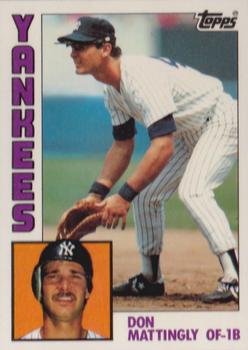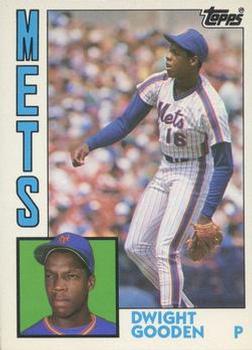

1984 Tiffany
Topps Tiffany & Topps Traded Tiffany Factory Sets
1984 Topps Tiffany & Traded Tiffany Set
Print Run: 7,000
Topps' first official premium baseball card set was released in 1984 and later became known among collectors as "Tiffany" cards. The sets were sold exclusively to hobby dealers in cases containing six complete sets. The 792-card factory set and the Traded set were packaged and distributed separately.
The 1984 Tiffany set box features a solid dark red design accented by an ornate gold border pattern and a classic gold foil seal bearing the words "CONTAINS ONE COMPLETE SET" printed in red ink. The bottom of the box is white. Each 792-card set was stamped with a unique set number, while Traded sets were not serial numbered.
Early set numbers were stamped in red ink, while sets beginning around serial number 5,700 were stamped in black ink. These black-stamped sets are also approximately one-half inch longer than the earlier red-stamped versions.
Although it is widely believed that approximately 10,000 Tiffany sets were produced, the serial numbers and surviving examples I have documented suggest the actual production run may have been significantly lower. Based on the highest known serial numbers, it is likely that only about 7,000 sets were ultimately produced.
Topps' first official premium baseball card set was released in 1984 and later became known among collectors as "Tiffany" cards. The sets were sold exclusively to hobby dealers in cases containing six complete sets. The 792-card factory set and the Traded set were packaged and distributed separately.
The 1984 Tiffany set box features a solid dark red design accented by an ornate gold border pattern and a classic gold foil seal bearing the words "CONTAINS ONE COMPLETE SET" printed in red ink. The bottom of the box is white. Each 792-card set was stamped with a unique set number, while Traded sets were not serial numbered.
Early set numbers were stamped in red ink, while sets beginning around serial number 5,700 were stamped in black ink. These black-stamped sets are also approximately one-half inch longer than the earlier red-stamped versions.
Although it is widely believed that approximately 10,000 Tiffany sets were produced, the serial numbers and surviving examples I have documented suggest the actual production run may have been significantly lower. Based on the highest known serial numbers, it is likely that only about 7,000 sets were ultimately produced.
If anyone finds any sets numbered higher than 7000, then please let me know.
1984 Topps Tiffany -vs- Base Cards
Tiffany cards can be distinguished from their regular-issue counterparts by their white card stock and high-gloss finish. Unfortunately, many sellers on eBay and other marketplaces incorrectly list standard cards as Tiffany cards.
For cards from the 792-card factory set, the easiest way to identify a Tiffany card is by examining the back. Authentic Tiffany cards feature a clean white background and do not contain the words "PRTD. IN U.S.A." Regular-issue cards, by comparison, have a grayish appearance and include the "PRTD. IN U.S.A." text.
It is important to note that some sellers digitally brighten images of regular cards to make the backs appear whiter than they actually are. In addition, advances in printing technology have enabled the creation of counterfeit Tiffany reprints that can closely resemble authentic cards in online photographs. As a result, it may be impossible to determine authenticity from images alone.
Once the card is in hand, you should compare its thickness and gloss to a known authentic Tiffany card from the same year. Many counterfeit examples have a smooth, glossy back that differs from the finish found on genuine Tiffany cards. Some known fakes also feature two asterisks (** ) immediately before the copyright line on the reverse of the card.
For cards from the 792-card factory set, the easiest way to identify a Tiffany card is by examining the back. Authentic Tiffany cards feature a clean white background and do not contain the words "PRTD. IN U.S.A." Regular-issue cards, by comparison, have a grayish appearance and include the "PRTD. IN U.S.A." text.
It is important to note that some sellers digitally brighten images of regular cards to make the backs appear whiter than they actually are. In addition, advances in printing technology have enabled the creation of counterfeit Tiffany reprints that can closely resemble authentic cards in online photographs. As a result, it may be impossible to determine authenticity from images alone.
Once the card is in hand, you should compare its thickness and gloss to a known authentic Tiffany card from the same year. Many counterfeit examples have a smooth, glossy back that differs from the finish found on genuine Tiffany cards. Some known fakes also feature two asterisks (** ) immediately before the copyright line on the reverse of the card.