
1986 Tiffany
Topps Tiffany & Topps Traded Tiffany Factory Sets
1986 Topps Tiffany & Traded Tiffany Set
Print Run: 5,125
The 1986 Topps Tiffany and Topps Traded Tiffany sets were made available exclusively to hobby dealers in cases containing six complete sets. The 792-card factory set and the Traded set were packaged and distributed separately.
The 1986 Tiffany set box features a solid brown design accented by an ornate gold border pattern and the classic gold foil seal bearing the words "CONTAINS ONE COMPLETE SET" printed in brown ink. The bottom of the box is white.
Each 792-card Tiffany set was stamped with a unique set number in black ink, while Traded Tiffany sets were not serial numbered.
Based on known serial numbers and surviving examples, it is believed that just over 5,000 1986 Topps Tiffany sets were produced. This relatively low production run, combined with the set's strong rookie card lineup, has made the 1986 Tiffany issue one of the more desirable releases among collectors.
The 1986 Topps Tiffany and Topps Traded Tiffany sets were made available exclusively to hobby dealers in cases containing six complete sets. The 792-card factory set and the Traded set were packaged and distributed separately.
The 1986 Tiffany set box features a solid brown design accented by an ornate gold border pattern and the classic gold foil seal bearing the words "CONTAINS ONE COMPLETE SET" printed in brown ink. The bottom of the box is white.
Each 792-card Tiffany set was stamped with a unique set number in black ink, while Traded Tiffany sets were not serial numbered.
Based on known serial numbers and surviving examples, it is believed that just over 5,000 1986 Topps Tiffany sets were produced. This relatively low production run, combined with the set's strong rookie card lineup, has made the 1986 Tiffany issue one of the more desirable releases among collectors.
1986 Topps Tiffany -vs- Base Cards
The 1986 Topps Tiffany cards can be distinguished from their regular-issue counterparts by their white card stock and high-gloss finish. In addition, authentic Tiffany cards do not have the asterisk (*) before the copyright line and do not contain the words "PRTD. IN U.S.A." on the reverse.
Many sellers on eBay and other marketplaces incorrectly list regular-issue cards as Tiffany cards. For cards from the 792-card factory set, the easiest way to identify a Tiffany card is by examining the back. Authentic Tiffany cards feature a bright white background, while regular-issue cards typically have a grayish appearance.
Collectors should be aware that some sellers digitally brighten photographs of regular cards to make the backs appear whiter than they actually are. Because of this, online images can sometimes be misleading.
Modern printing technology has also made it possible for counterfeit Tiffany reprints to be produced. Some of these fakes can closely resemble authentic cards, making it difficult or even impossible to determine authenticity from photographs alone.
Once the card is in hand, the best method of authentication is to compare its thickness and gloss to a known authentic Tiffany card from the same year. Genuine Tiffany cards have a distinct premium feel, thicker card stock, and a glossy finish that are difficult for counterfeit examples to accurately replicate.
Many sellers on eBay and other marketplaces incorrectly list regular-issue cards as Tiffany cards. For cards from the 792-card factory set, the easiest way to identify a Tiffany card is by examining the back. Authentic Tiffany cards feature a bright white background, while regular-issue cards typically have a grayish appearance.
Collectors should be aware that some sellers digitally brighten photographs of regular cards to make the backs appear whiter than they actually are. Because of this, online images can sometimes be misleading.
Modern printing technology has also made it possible for counterfeit Tiffany reprints to be produced. Some of these fakes can closely resemble authentic cards, making it difficult or even impossible to determine authenticity from photographs alone.
Once the card is in hand, the best method of authentication is to compare its thickness and gloss to a known authentic Tiffany card from the same year. Genuine Tiffany cards have a distinct premium feel, thicker card stock, and a glossy finish that are difficult for counterfeit examples to accurately replicate.
1986 Tiffany Traded -vs- Base Traded Cards
Topps Traded Tiffany cards can be difficult to distinguish from regular-issued Topps Traded cards, especially when evaluating cards from photographs alone. Both versions feature white card backs, making identification more challenging than with the standard 792-card Tiffany set.
One of the best indicators is the overall appearance of the reverse. Authentic Tiffany Traded cards typically have a cleaner, brighter white background, while regular Traded cards often appear slightly duller. Another useful identifying characteristic is the absence of the double asterisks (**), which are commonly found at the bottom left of regular Traded card backs. Authentic Tiffany Traded cards should not have these markings.
Because these differences can be subtle and are often difficult to accurately assess from photographs, online images alone are rarely sufficient to confirm authenticity. Once the card is in hand, the best method is to compare its thickness and gloss to a known authentic Tiffany Traded card from the same year.
If an authentic Tiffany example is not available, comparing the card to a regular Traded card can also be helpful. Genuine Tiffany Traded cards feature a noticeable glossy finish on the front, while regular Traded cards have a flatter, less reflective surface. The premium card stock and gloss coating remain some of the most reliable indicators of an authentic Tiffany Traded card.
One of the best indicators is the overall appearance of the reverse. Authentic Tiffany Traded cards typically have a cleaner, brighter white background, while regular Traded cards often appear slightly duller. Another useful identifying characteristic is the absence of the double asterisks (**), which are commonly found at the bottom left of regular Traded card backs. Authentic Tiffany Traded cards should not have these markings.
Because these differences can be subtle and are often difficult to accurately assess from photographs, online images alone are rarely sufficient to confirm authenticity. Once the card is in hand, the best method is to compare its thickness and gloss to a known authentic Tiffany Traded card from the same year.
If an authentic Tiffany example is not available, comparing the card to a regular Traded card can also be helpful. Genuine Tiffany Traded cards feature a noticeable glossy finish on the front, while regular Traded cards have a flatter, less reflective surface. The premium card stock and gloss coating remain some of the most reliable indicators of an authentic Tiffany Traded card.
1986 Topps Tiffany Key Rookie Cards
The 1986 Topps Tiffany and Topps Traded Tiffany sets contain an impressive collection of rookie cards, XRCs, and final player cards that feature some of the most recognizable names of the 1980s and 1990s.
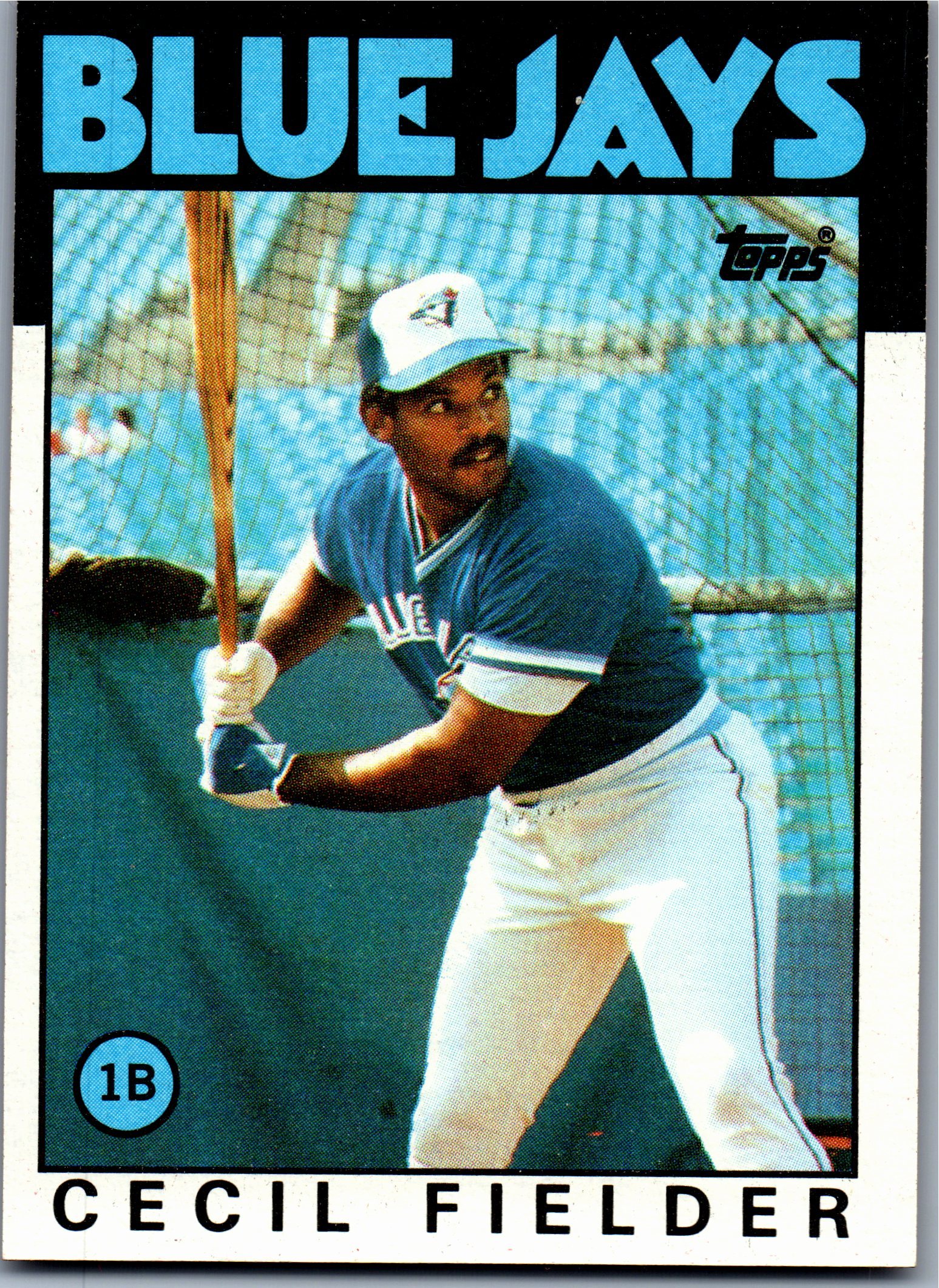
One of the key rookie cards in the main set is #386 Cecil Fielder. After beginning his career in North America and spending a season in Japan, Fielder returned to Major League Baseball and became one of the game's premier power hitters. He led the American League with 51 home runs in 1990 and became the first player since George Foster in 1977 to reach the 50-home run mark.
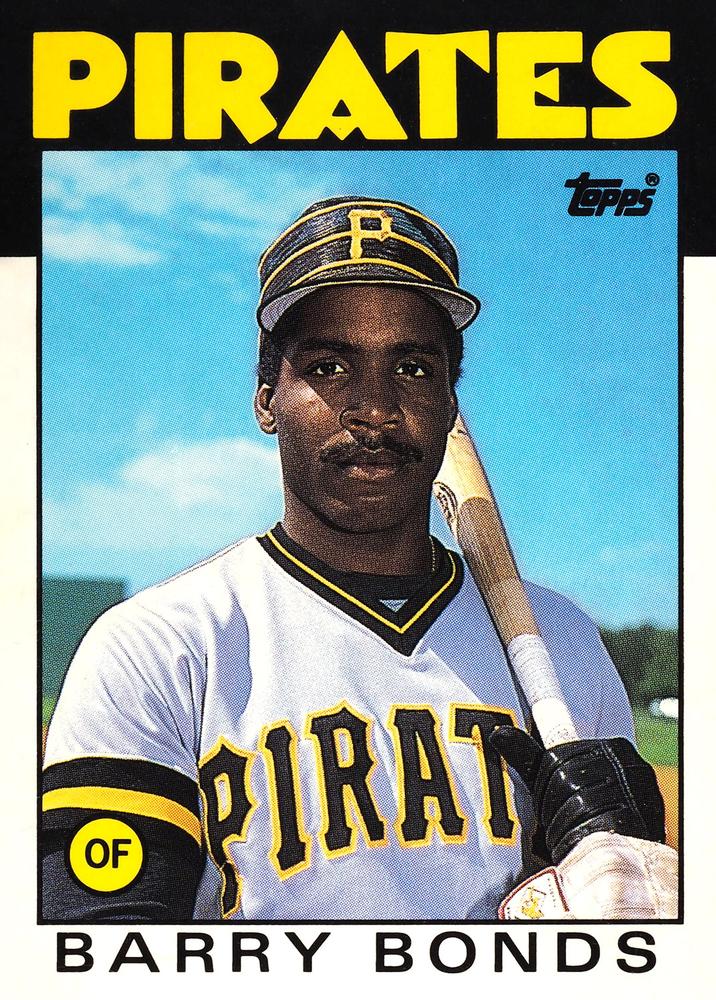
The 1986 Topps Traded Tiffany set is loaded with star power, beginning with #11T Barry Bonds. Bonds went on to become Major League Baseball's all-time home run leader with 762 career home runs and won a record seven National League MVP Awards.
Another major card is #20T Jose Canseco, whose rookie card remains one of the most recognizable cards of the decade. Canseco became the first player in baseball history to hit 40 home runs and steal 40 bases in the same season when he accomplished the feat in 1988.
#24T Will Clark features the XRC of one of the best pure hitters of his generation. Clark was a six-time All-Star and is remembered for his dramatic home run off Nolan Ryan in the 1989 National League Championship Series.
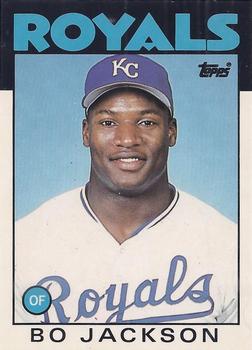
#50T Bo Jackson is one of the most iconic cards in the entire Tiffany series. Jackson became a cultural phenomenon as a two-sport superstar, earning All-Star honors in Major League Baseball while also starring in the NFL. His legendary "Bo Knows" advertising campaign helped make him one of the most recognizable athletes of the era.
The set also includes several notable final player cards. #400 Rod Carew represents the final Topps card of the Hall of Fame hitter who collected 3,053 career hits and won seven American League batting titles.
#185 Rollie Fingers is the final card of one of baseball's greatest relief pitchers. Fingers won both the American League Cy Young Award and MVP Award in 1981, a rare accomplishment for a relief pitcher.
#85 Tony Perez marks the final Topps card of the Hall of Fame slugger and key member of Cincinnati's "Big Red Machine." Perez helped lead the Reds to back-to-back World Series championships in 1975 and 1976 and finished his career with 379 home runs and over 1,600 RBIs.
These star rookies, XRCs, and Hall of Fame final player cards help make the 1986 Topps Tiffany and Topps Traded Tiffany sets among the most desirable releases in the entire Tiffany series.
One of the key rookie cards in the main set is #386 Cecil Fielder. After beginning his career in North America and spending a season in Japan, Fielder returned to Major League Baseball and became one of the game's premier power hitters. He led the American League with 51 home runs in 1990 and became the first player since George Foster in 1977 to reach the 50-home run mark.
The 1986 Topps Traded Tiffany set is loaded with star power, beginning with #11T Barry Bonds. Bonds went on to become Major League Baseball's all-time home run leader with 762 career home runs and won a record seven National League MVP Awards.
Another major card is #20T Jose Canseco, whose rookie card remains one of the most recognizable cards of the decade. Canseco became the first player in baseball history to hit 40 home runs and steal 40 bases in the same season when he accomplished the feat in 1988.
#24T Will Clark features the XRC of one of the best pure hitters of his generation. Clark was a six-time All-Star and is remembered for his dramatic home run off Nolan Ryan in the 1989 National League Championship Series.
#50T Bo Jackson is one of the most iconic cards in the entire Tiffany series. Jackson became a cultural phenomenon as a two-sport superstar, earning All-Star honors in Major League Baseball while also starring in the NFL. His legendary "Bo Knows" advertising campaign helped make him one of the most recognizable athletes of the era.
The set also includes several notable final player cards. #400 Rod Carew represents the final Topps card of the Hall of Fame hitter who collected 3,053 career hits and won seven American League batting titles.
#185 Rollie Fingers is the final card of one of baseball's greatest relief pitchers. Fingers won both the American League Cy Young Award and MVP Award in 1981, a rare accomplishment for a relief pitcher.
#85 Tony Perez marks the final Topps card of the Hall of Fame slugger and key member of Cincinnati's "Big Red Machine." Perez helped lead the Reds to back-to-back World Series championships in 1975 and 1976 and finished his career with 379 home runs and over 1,600 RBIs.
These star rookies, XRCs, and Hall of Fame final player cards help make the 1986 Topps Tiffany and Topps Traded Tiffany sets among the most desirable releases in the entire Tiffany series.
Affiliate Disclosure: Some card links may be affiliate links. If you click a link and make a purchase, TiffanyCards.com may earn a commission at no additional cost to you.
1986 Topps Gary Carter All Star #708 Autograph Leukemia Card
This card is neither a Topps Tiffany card nor a regular-issue Topps card. Instead, it is a special promotional card produced by Topps for Hall of Famer Gary Carter as part of a fundraising campaign benefiting the Leukemia Society of America.
Collectors who made a $10 donation to the Leukemia Society were eligible to receive an autographed Gary Carter card through the promotion. Because of its unique origin, the card shares characteristics of both Tiffany and regular-issue Topps cards while being neither.
Like a Tiffany card, it features a white card back. However, unlike authentic Tiffany cards, it does not have the signature high-gloss finish on the front. The card also retains the "E*" copyright designation and "PRTD. IN U.S.A." text found on regular-issue Topps cards.
As a result, this card should be considered a separate promotional issue rather than a Tiffany variation or a standard base card.
Click here to watch the Gary Carter Auto Commercial on YouTube
Collectors who made a $10 donation to the Leukemia Society were eligible to receive an autographed Gary Carter card through the promotion. Because of its unique origin, the card shares characteristics of both Tiffany and regular-issue Topps cards while being neither.
Like a Tiffany card, it features a white card back. However, unlike authentic Tiffany cards, it does not have the signature high-gloss finish on the front. The card also retains the "E*" copyright designation and "PRTD. IN U.S.A." text found on regular-issue Topps cards.
As a result, this card should be considered a separate promotional issue rather than a Tiffany variation or a standard base card.
Click here to watch the Gary Carter Auto Commercial on YouTube